Toward a Resilient and Sustainable Society From “Measuring” Nature to “Connecting” Corporate Action〜Nature Footprint Supports the Next Stage of Nature-related Action〜
[The author of this report]
- Waseda University
Department of Resources and Environmental Engineering, School of Creative Science and Engineering - Professor Norihiro Itsubo
- MS&AD InterRisk Research & Consulting, Inc.
General Manager, Risk Management Department V and Fellow - Kosuke Terasaki
2026.10.15
日本語の記事は、こちらからお読みいただけます。
Click the link above to read the article in Japanese.
- Considering progress in TNFD-related initiatives, this article examines the role and significance of Nature Footprint.
- Building on LCANote 1), an approach is presented for understanding impacts on nature across the entire value chain.
- Differences between existing indicators that measure abundance/species richness within species diversity, such as MSA, PDF, and STAR, and E/MSY are discussed
- Outcomes of joint research and future directions for social implementation and advancement are discussed.
Following the growing focus on climate change, “natural capital” and “biodiversity” are rapidly gaining prominence as strategic issues for corporate management. In particular, many companies have begun to identify and assess nature-related issues following the disclosure recommendations of the Taskforce on Nature-related Financial Disclosures (TNFD).
However, in practice, many companies still remain at the stage of qualitative assessment or high-level identification of risks. Although companies may be able to identify nature-related issues around their own sites, few have yet determined what is happening across the entire value chain, including raw material procurement, where significant impacts are concentrated, and which improvements should be prioritized.
Nature Footprint is being developed in response to these challenges. based on the concept of Life Cycle Assessment (LCA)Note 1), Nature Footprint enables the quantitative assessment of impacts on nature throughout the entire value chain. By incorporating location information for production sites, raw material production areas, and other locations, it can be used to identify material regions and business processes. Rather than serving only as an assessment for disclosure, Nature Footprint is expected to provide a basis for dialogue and action among diverse stakeholders, including industry, financial institutions, consumers, and government.
A key component of Nature Footprint is the calculation of extinction risk from land-use change based on site location information. Since 2023, MS&AD InterRisk Research & Consulting has conducted joint research with Professor Norihiro Itsubo of Waseda University, a leading researcher in LCA, to develop location-based biodiversity extinction-rate damage factors for land-use change. The results were published in June 2026 in Environmental Science & Technology. The resulting methodology has also been used as a technical foundation in the “Development and Demonstration Project for Nature Footprint Based on the Promotion of Nature-related Information Disclosure by Financial/Investment Institutions and International Standardization”, conducted for a year and a half from October 2024 under the “Bridging the Gap between R&D and Society 5.0 Program” (BRIDGE)Note 2)). The next goal is to move into the phase of full-scale practical implementation.
Why Nature Footprint now? How does it differ from conventional methods? And how will it transform decision-making processes for dialogue and change among companies, financial institutions, and society? Prof. Itsubo and Terasaki of MS&AD InterRisk Research & Consulting discussed these questions.
1. Nature-related Action Enters Its Next Stage
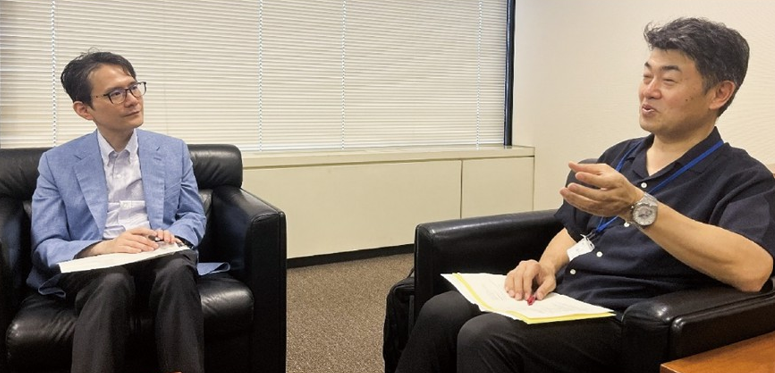
Terasaki:Recently, I have clearly sensed that corporate action on nature-related issues has entered its next stage. Until fairly recently, I think it was often discussed as an extension of CSR initiatives, but that is no longer the case. With the publication of the TNFD disclosure recommendations, companies have begun assessing nature-related issues. However, I believe the key question is not simply “how to organize information for disclosure”, but what companies should understand beyond disclosure, how they should engage in dialogue, and what they should change in their business practices.
Prof. Itsubo:That is exactly right. Disclosure is one entry point, but it is not the essence of the issue. When diverse stakeholders such as companies, financial institutions, government and consumers discuss nature-related issues, what criteria should guide that discussion? We need information that can serve as a common basis for assessment.
At the Global Nature Positive Summit held in Kumamoto in July 2026, there was an extremely strong response to our initiative to implement Nature Footprint, which we have developed in collaboration with the government, across industry. I came away with a particularly strong sense that a method capable of serving as that common basis for assessment is needed when industry communicates information to consumers or financial institutions.
Terasaki:So the assessment method will not merely be an analytical tool, but a “common language” that connects various stakeholders across society.
Prof. Itsubo:Yes. Nature-related issues cannot be addressed by any single company alone. They must be viewed through their connections with upstream production sites, downstream consumption, the financial institutions providing capital, local communities, and policy. That is precisely why we need an assessment method that is scientific while alsousable as a common basis by diverse stakeholders.
From “Measuring” Nature to “Connecting” Corporate Action
2. The Starting Point of the Joint Research: Introducing Location-Based Resolution into LCA
Terasaki: That was exactly the issue we had in mind when we approached Prof. Itsubo in 2022 to discuss joint research. Conventional LCA provides an extremely powerful framework for assessing the entire value chain. But for CO2 emissions, the climate change impact per ton is the same worldwide. For biodiversity as well, damage factorsNote 3), such as the impact of converting one hectare of land on species extinction risk, were determined at the country level. Meanwhile, considering the TNFD recommendations, which were still at the draft stage at the time, addressing nature-related issues makes it important to consider, at higher resolution, “where impacts such as land-use change and resource use are occurring”.
Even with raw material procurement, for example, biodiversity impacts can differ substantially for the same crop depending on where the farmland is located or which forest area is converted. The initial starting point of our joint research was therefore the idea that we should build “location-based LCA” to measure impacts on nature while taking into account location information such as raw material production areas.
Prof. Itsubo:Terasaki’s proposal was extremely important. Conventional LCA has prioritized broad coverage of the entire life cycle, but one aspect where it had not achieved sufficient resolution was impacts attributable to “location”, such as raw material sourcing areas, farmland, forests, and factory locations.
Yet when considering impacts on nature, that is exactly where location becomes important. Different farmland produces different impacts, and changing the location of a forest also changes the impacts. With nature-related issues, the need for greater geographic resolution became much more apparent.
Terasaki:We initially began with joint research on damage factors focused specifically on the impacts of land-use change, but it was also significant that this subsequently expanded into the BRIDGE “Development and Demonstration Project for Nature Footprint Based on the Promotion of Nature-related Information Disclosure by Financial/Investment Institutions and International Standardization”.
Prof. Itsubo:Yes. Through our joint research with MS&AD InterRisk Research & Consulting, we first demonstrated the importance and feasibility of implementing land-use change assessments based on location information. That then made it clear that we needed a more comprehensive view of impacts on natural ecosystems, covering not only land but also water and climate change.
We expanded the work into BRIDGE in collaboration with the government in order to substantially accelerate that development. Being able to advance the development together with diverse experts within an industry-academia-government framework was very significant, in my view.
3. What Is Nature Footprint? An Integrated Framework Developed from LIME
Terasaki: Nature Footprint is sometimes understood as an extension of carbon footprint or water footprint, but in reality, it is a much broader concept, correct?
Prof. Itsubo:Yes. Nature Footprint is a framework designed to capture the impacts that corporate activities have on nature as comprehensively as possible. It covers not only land use but also impacts arising through water use and climate change. The key is to make it possible to assess those impacts across the entire value chain.
Behind this development lies many years of accumulated research on the environmental impact assessment method known as the Life Cycle Impact Assessment Method based on Endpoint Modeling (LIME)Note 4). Since 1998, research and development on LIME has pursued the goal of comprehensively assessing environmental impacts in Japan. LIME3 (Figure 1 on the next page), which began in 2010, also incorporated assessment of global supply chains into its scope, while accumulating expertise in assessing biodiversity, primary production, plant growth, and related areas.
![[Figure 1] Relationship between the Environmental Impact Assessment Method LIME and Nature Footprint](/contents/img/products/2703/pic2.png)
Terasaki: Nature Footprint has now added the expertise of specialists in nature-related fields to that foundation.
Prof. Itsubo:Exactly. Building on the knowledge gained through LIME, we needed to bring together the capabilities of various researchers, including biodiversity specialists, geographic information specialists, and water resource specialists, to handle site location information with greater precision.
We were able to involve these specialists because of the network built through our previous research, and I believe there was also a shared understanding that expertise from a single field alone would not be enough to truly implement solutions to nature-related issues in society.
Terasaki:After all, issues involving nature cannot be explained by just one factor.
Prof. Itsubo: Yes. Environmental issues are inherently multifaceted. Looking only at land use is not enough, nor is focusing only on water use. Moreover, dialogue will be difficult to advance if each stakeholder discusses these issues using different indicators.
Diverse stakeholders need indicators that are integrated to some degree to share a common basis for discussion. In that sense as well, I see Nature Footprint as a framework that has a scientific foundation while supporting practical communication.
4. The Strength of LCA: Connecting Bottom-up Assessments of Products and Services to Company-wide Decisions
Terasaki: I believe a major strength of Nature Footprint is that it can directly apply the strengths of LCA to nature-related assessments. LCA is very effective at assessing products and services. In other words, it can start with a product or service, trace its value chain, build up impacts from the bottom up, and assess them in an integrated manner. The resulting information can then be presented to management as a basis for company-wide decisions. I see its ability to gather information from operations from the bottom up and connect it to a top-down approach as an enormous advantage. What is your view?
Prof. Itsubo: That point is indeed important. LCA can build up assessments at the product and service level to show the overall picture of a company’s activities. This also has major significance for nature-related issues.
For example, it can show which product groups have major upstream impacts, which raw materials are important, and which countries or regions are relatively important. Building up such information from the bottom up enables a company to establish its priorities.
Terasaki:Moreover, Nature Footprint enables higher-resolution assessment than conventional LCA, so it does more than simply identify priorities. Another major advantage is that those priorities can lead into a cycle of implementing improvements at the site level and reducing the overall Nature Footprint impact.
Prof. Itsubo:Yes. That is a very important point. For example, when improvements are made at a particular supplier or site, it becomes possible to see how their effects are reflected in impacts across the entire value chain. This is very important for companies.
If site-level improvements are not connected to the overall assessment, efforts made on the ground become difficult to recognize in the context of management and disclosure. Nature Footprint has major significance because it makes that connection possible.
5. Why Location-specific Assessment of Production Sites and Sourcing Areas Matters
Terasaki:In this joint research, as an important component of Nature Footprint, we worked on calculating extinction risk from land-use change based on location-based information on production sites and sourcing areas (Figure 2 on the next page). I believe this also had major practical significance.
![[Figure 2] Map of location-based damage factors for biodiversity extinction rate associated with land-use changeLand-use change](/contents/img/products/2703/pic3.png)
Prof. Itsubo: Assessment using country-level averages is effective for screening to obtain an overview of the overall picture. However, using that approach alone has limitations. Particularly in vast countries such as China and the United States, damage factors can vary substantially depending on location. Using national averages can therefore result in either overestimation or underestimation.
By contrast, if assessments can be based on location information for production sites, raw material production areas, and other locations, it becomes possible to identify which regions are hotspots and where engagement should be prioritized. This matters not only for assessment accuracy but also for clearly identifying the stakeholders with whom engagement should take place.
Terasaki:That is extremely significant in practical terms. Ultimately, action cannot follow unless it is clear who to engage with, how improvements should be made, and in which region of which country.
Prof. Itsubo: Exactly. Once the location is identified, it becomes clear who the the relevant stakeholders to engage with should be. Which parties were actually engaged, what actions were proposed, and what improvements were achieved? When the process extends that far, a company can explain its actions through a coherent story and can also provide quantitative evidence of the improvements.
For companies that have already increased traceability through procurement due diligence and similar initiatives, another major benefit is the ability to demonstrate how those efforts have contributed to improving the overall assessment.
6. Differences from Existing Indicators: Distinguishing Biodiversity Importance from Ecosystem Condition and Integrity
Terasaki:Various indicators are used for nature-related assessments, including Mean Species Abundance (MSA), Potentially Disappeared Fraction (PDF), and Species Threat Abatement and Restoration (STAR). I expect this is also an area of considerable interest to readers. What would be the clearest way to explain how these differ from Nature Footprint?
Prof. Itsubo:The first important point is not to confuse what each indicator represents. In recent years, international discussions have advanced around the State of Nature (SoN), or “indicators of the state of nature”, being developed by the Nature Positive Initiative (NPI). Even within this discussion, indicators that examine “ecosystem condition or integrity” need to be considered separately from indicators that show “where biodiversity importance is concentrated ”.
From this perspective, MSA and PDF are indicators of ecosystem integrity or changes in ecosystem condition. They are useful for understanding the extent to which ecosystem health has been impaired. However, these indicators do not substantively represent the importance of biodiversity. They have limitations as indicators for determining where management should place priority and which areas are more significant from a biodiversity perspective.
Terasaki:MSA is an abundance-based indicator of ecosystem integrity or condition, and although PDF focuses on species, it tends to behave similarly to MSA when the definitions below are taken into account. MSA and PDF tend to produce high values in places such as tundra and deserts, which have experienced relatively little human intervention but inherently contain few species. By contrast, tropical forests and other areas exposed to development threats tend to produce low values despite having a very large absolute number of species. This creates the issue that they are difficult to characterize as indicators that directly represent importance.
Prof. Itsubo: Yes. In that sense, I believe E/MSY and STAR are the principal indicators that can meaningfully represent the importance of biodiversity.
E/MSY stands for Extinctions per Million Species-Years and can be expressed as “the number of species extinctions per million species-years”. It provides a common scale for expressing biodiversity loss in terms of extinction rate, making it easier to understand how much the risk of species extinction increases.
STAR is also useful as an indicator focused on reducing threats to species and their potential for recovery.
Terasaki:I also understand that a major reason for adopting E/MSY was its position as an international common language.
Prof. Itsubo:Yes. With LIME, we have also proposed EINES, an extinction risk indicator unique to Japan. However, if Nature Footprint is to serve as a global communication tool, it was important to select an indicator that is internationally applicable rather than one specific to Japan.
E/MSY is a concept that has been used in discussions of the sixth mass extinction and in the context of the Millennium Ecosystem Assessment and Planetary Boundaries, making it relatively easy to understand both scientifically and socially. I believe it is also an indicator that is well suited to use in the business world for external explanations and internal discussions.
〈Overview of MSA and PDF〉
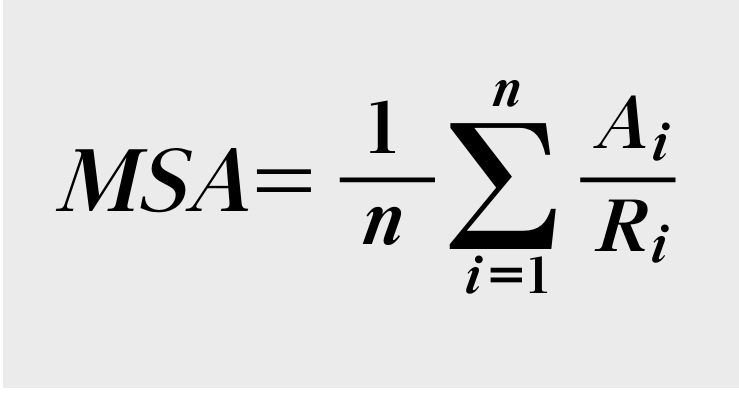
① MSA: Ratio of the abundance of native species actually present in an ecosystem to their abundance in a reference state without pressures
n = number of native species
Ai = abundance of species i in a given environment
Ri = abundance of species i in the reference state
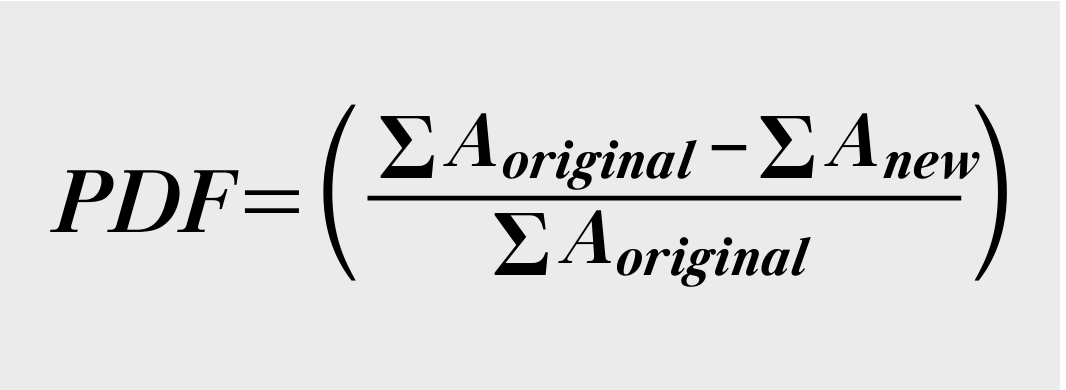
② PDF: Proportion by which the number of species decreases relative to the reference state over a given area and period
Anew = number of species in a given environment
Aoriginal= number of species in the reference state
7. Connecting Portfolio-, Business/Product-, and Site-level Assessments, Business, and Site Levels
Terasaki:Assessments and decision-making for nature-related issues take place at various levels of granularity, including the investment and financing portfolio level of financial institutions, the business and product value chain level of individual companies, and the site level of individual factories and production regions. Nature Footprint still requires further improvements in spatial resolution to support site-level assessments, but I believe it can serve as a common indicator connecting portfolio-, business/product-, and site-level assessments.
In that sense, the Rapid High-Integrity Nature-positive Outcomes (RHINO)Note 5) approach announced by the International Union for Conservation of Nature (IUCN) in 2025 may provide a useful conceptual model to reference. The RHINO approach uses the STAR indicator to present approaches to assessment at the respective levels of portfolio, value chain, and site. On the other hand, how does the STAR indicator adopted there differ from Nature Footprint?
Prof. Itsubo:I believe the IUCN’s RHINO approach provides a useful practical framework for companies to conduct assessments, develop action plans, and implement them based on the STAR indicator. However, the impact driver it primarily addresses is terrestrial land use. Various factors that threaten species are identified, but multiple threat factors are essentially presented in parallel, so it can be difficult to determine which poses the greatest threat.
Terasaki:That is quite important in practical terms. If the issues are simply presented in parallel, companies have difficulty seeing where they should begin.
Prof. Itsubo: In that respect, Nature Footprint can break down and show the respective contributions of land use, water use, and climate change. In other words, rather than simply concluding that “the impact on nature is large”, it reveals the principal cause.
If land use is the main cause, the focus can be placed on procurement and land management. If water is the main cause, watershed management and improvements in water use become relevant. If climate is the main cause, connecting the response to decarbonization measures becomes important. A major difference is that it reveals these specific directions for improvement.
Terasaki:Indeed, Nature Footprint can quantitatively show the extent of the biodiversity impact caused by using 1 m3 of water in a particular river basin. I think that can be seen as a strength of a method developed based on LCA. So rather than stopping at visualization, it can lead to governance and the prioritization of improvement measures.
Prof. Itsubo:Exactly. What companies need, I believe, is not an abstract sense of crisis but information that shows what should be improved and how.
8. Significance Created Through Industry-Academia-Government Collaboration: Becoming a Common Axis Extending Across Industry, Finance, Local Governments, and Consumers
Terasaki: A major feature of this BRIDGE Nature Footprint demonstration project is that it has progressed not only through the participation of universities and research institutions, but also through the involvement of many companies and financial institutions, as well as collaboration with government (Table 1 on the next page). Where do you see the significance of this collaboration among industry, academia, government, and finance?
| Lead Organization | Ministry of the Environment Waseda University Value Management Institute, Inc. |
|
|---|---|---|
| Theme 1 | Waseda University National Institute of Advanced Industrial Science and Technology National Agriculture and Food Research Organization Forestry and Forest Products Research Institute, Forest Research and Management Organization Research Institute for Humanity and Nature Tohoku University Kyoto University Kansei Gakuin University |
|
| Theme 2 | Lead Organization | Value Management Institute, Inc. |
| Participating Organizations | National Graduate Institute for Policy Studies Nikken Sekkei Ltd. Nikken Sekkei Research Institute Ajinomoto Co., Inc. Toyota Motor Corporation Sekisui Chemical Co., Ltd. Sumitomo Forestry Co., Ltd. Shiseido Company, Limited AGC Inc. JX Advanced Metals Corporation Taiheiyo Cement Corporation Panasonic Holdings Corporation NEC Corporation Nippon Paper Industries Co., Ltd. Kajima Corporation Shimizu Corporation Taisei Corporation Honda Motor Co., Ltd. Hitachi, Ltd. Seiko Epson Corporation SUMITOMO CHEMICAL COMPANY, LIMITED LIXIL Corporation The Norinchukin Bank MS&AD Insurance Group Holdings, Inc. Mitsubishi UFJ Trust and Banking Corporation Sumitomo Mitsui Banking Corporation Shizuoka Financial Group, Inc. The Joyo Bank, Ltd. SuMPO NEXT Co., Ltd Sustainable Management Promotion Organization TCO2 Co., Ltd. MS&AD InterRisk Research & Consulting, Inc. |
(Source: Prepared by MS&AD InterRisk Research & Consulting based on the BRIDGE “Development and Demonstration Project for Nature Footprint Based on the Promotion of Nature-related Information Disclosure by Financial/Investment Institutions and International Standardization” website 2))
Prof. Itsubo:I think that is an important point. Nature-related issues cannot be solved by any one company acting alone. Diverse industries, including materials manufacturers, assembly industries, food, construction, and electrical equipment, are interconnected, with financial institutions, local governments, and consumers also involved.
If results can be shared using the same assessment method in that environment, people from different sectors can discuss on a common basis what needs to be reduced across the entire value chain and where new value can be found.
Terasaki:That also has major significance for financial institutions.
Prof. Itsubo: Yes. However, this does not mean that financial institutions simply look at the results assessed and disclosed by operating companies. If the assessment method can be used in a way that encompasses the entire value chain, financial institutions will increasingly be able to apply it to portfolio analysis and individual transaction assessments as well.
In other words, what matters is enabling operating companies and financial institutions to discuss these issues on the same foundation. I believe that is where the social significance of this method lies.
Terasaki:For companies as well, a major advantage of the method is that it need not be confined to their own disclosure activities but can also be used with dialogue involving suppliers, customers, financial institutions, and local communities in mind.
9. From a Country-level Overview to High-resolution, Location-based In-depth Analysis
Terasaki:Ease of adoption is also important for companies. In that respect, I think a two-stage approach of first obtaining an overall view using country-level damage factors, and then conducting high-resolution, location-based in-depth analysis of important raw materials and regions, is very practical.
Prof. Itsubo:Exactly. There is no need to examine everything in detail from the outset. First, look across the entire life cycle at country-level resolution and identify which countries are important for which raw materials. Then, for the most important targets, increase the accuracy of the assessment by incorporating information on actual sourcing locations, cultivation areas, and sites.
This two-stage approach lowers the barriers to adoption while still allowing thorough in-depth analysis where it is needed.
Terasaki: And that in-depth analysis also connects with traceability initiatives and procurement due diligence.
Prof. Itsubo:Yes. It becomes possible to show quantitatively how traceability initiatives and corrective measures that companies have undertaken individually contribute to improvements in the overall assessment. I think that is significant in practical terms.
10. Advancing Adoption and Further Development Simultaneously: The Role of the Consortium and Guidance
Terasaki:How do you intend to promote broader adoption going forward?
Prof. Itsubo:Our basic approach is to advance adoption and development in parallel. Version 1 is not the end. We will improve it as people use it. To achieve that, we need a forum where users and developers can continuously exchange views.
We are therefore moving forward with the establishment of the Nature Footprint ConsortiumNote 6). Users will actually apply the method, discuss the results and their interpretation with developers, and improve the method while receiving feedback. We want it to evolve through this kind of agile approach.
Terasaki:“Nature Footprint: Development and Application of Life Cycle Assessment Focusing on Nature and Biodiversity” is also scheduled for publication in November 2026.
Prof. Itsubo:Yes. We also plan to publish country-level assessment factors. This will enable companies to calculate biodiversity risk using existing data such as CO2 emissions, water consumption, and land use area. We are also moving forward with implementation in LCA software, with the aim of making Nature Footprint assessments easier to conduct by using data already entered for carbon footprint assessments.
This should make it easier to establish a process in which companies first begin assessing impacts on nature within the existing LCA framework and then examine the important areas in greater depth.
Terasaki: With Version 1 being released, practical application will now begin in earnest. However, at the same time, there remains considerable scope to further advance the methodology. At this stage, what directions do you envision for its future development?
Prof. Itsubo: Yes. The current Nature Footprint represents a major step forward toward a form that can be used in practice, but of course it is not the final form. One direction for future development is to expand the biological groups covered by the assessment. Assessments currently focus on taxonomic groups such as mammals, birds, amphibians, reptiles, and plants, but insects, soil organisms, and other groups will also need to be included in the future.
Version 1 already addresses impacts on aquatic environments to a certain extent, but there is room to further enhance this area in the future. In addition to land use, water use, and climate change, it will be important to enable impact drivers such as invasive species and overexploitation to be addressed within the same framework.
Improving spatial resolution is another major area of focus. Assessments are currently based on a 0.25-degree grid (approximately 27 km × 27 km at the equator).. We want to develop the method so that it can accommodate more detailed location information by making use of new technologies such as AI and environmental DNA.
Terasaki:So Version 1, which can already be used in practice, will serve as the starting point, while both the scope and accuracy will continue to expand in the future. We hope that many companies will participate in the Nature Footprint Consortium.
11.The Role of MS&AD InterRisk Research & Consulting: Translating Joint Research into Practical Implementation
Terasaki:Through our joint research with Prof. Itsubo, MS&AD InterRisk Research & Consulting has accumulated the knowledge needed for the practical implementation of Nature Footprint. MS&AD InterRisk Research & Consulting already has extensive experience supporting companies with TNFD disclosures and nature-related risk management. Going forward, we intend to build on these results by developing services that provide more quantitative and consistent assessments and extend to support for formulating and implementing transition plans based on those assessments.
Prof. Itsubo:Research gains social value only when it is put to use. In that sense, I believe it is significant to have a partner such as MS&AD InterRisk Research & Consulting that can translate research into practice through direct engagement with companies in the field.
The initiative began as joint research, accelerated through BRIDGE, and will now expand further into use by companies and financial institutions. I believe that this progression itself will increase the value of the method.
Terasaki:We also see this field as more than simply a new assessment service. We believe it is a theme deeply connected to how corporate management and finance will operate in the future. That is precisely why we aim to contribute to the early development of this field and support implementation across industry.
12. What Lies Ahead: Toward Integrated Assessment Connecting Climate, Nature, and Society
Terasaki:In recent years, discussions of disclosure and assessment have expanded beyond the Task Force on Climate-related Financial Disclosures (TCFD) and TNFD to include social dimensions, such as the Taskforce on Inequality and Social-related Financial Disclosures (TISFD). I feel there is a growing need to understand corporate activities in a more integrated way, encompassing climate, nature, and even society and well-being. How do you view the future potential of LCA in this respect?
Prof. Itsubo:I think that is a very important perspective. LCA has developed primarily with a focus on environmental aspects, but because it is fundamentally an assessment method designed to support decision-making, I believe it should evolve in the future toward a more comprehensive understanding of climate, nature, and society.
In fact, international standards for social LCA are also being developed, and we have proposed an assessment method covering impacts on education that has already been published as a paper. Going forward, it will be important to broaden the scope beyond education to social impacts including poverty and gender, and to develop the approach into a more comprehensive method for supporting decision-making.
In that sense, rather than remaining a standalone method for assessing nature, I believe Nature Footprint will eventually become one component of integrated assessment that also encompasses climate, society, and even well-being.
Terasaki:Corporate sustainability management has also reached a stage where the question is shifting from how to address individual themes separately to how to connect them across themes to decision-making. It seems Nature Footprint can also be expected to provide a foundation for the integrated discussions that lie ahead.
13. Concluding the Discussion: Nature Footprint Moves Practical Action Forward
Nature-related action is no longer a peripheral area of CSR. It is an important issue involving supply chains, relationships with local communities, dialogue with finance, corporate value, and even the sustainability of society as a whole.
Qualitative understanding alone is not sufficient to advance this discussion. It is necessary to visualize where impacts occur, what causes them, and their magnitude, and to establish a basis for assessment that can be shared by diverse stakeholders.
Nature Footprint provides that practical foundation. It can assess the contributions of land use, water use, and climate change in an integrated manner. It can also be readily linked to LCA inventory data and, in portfolio and value chain assessments, can link a country-level overview with more detailed analysis based on higher-resolution location information. These capabilities are central to the distinctiveness of Nature Footprint.
The joint research conducted by Prof. Itsubo and MS&AD InterRisk Research & Consulting marked an important step toward its implementation.
It helps reveal impacts that were previously difficult to assess and connects that information to dialogue among industry, financial institutions, government, and consumers. . Nature Footprint can serve as the starting point for that process.
References and Other Materials
1)R. Liu, H. Ohashi, A. Hirata, L. Tang, T. Matsui, K. Terasaki, N. Itsubo, “Location-Based Damage Factors to Assess the Impact of Future Land-Use Changes on the Biodiversity Extinction Rate”, Environmental Science & Technology, 60 (26), Washington, DC: American Chemical Society, 2026, pp.18608-18620, DOI: 10.1021/acs.est.6c02140(Last accessed August 25, 2026)
<https://pubs.acs.org/doi/10.1021/acs.est.6c02140>
2) Waseda University and Value Management Institute, Inc., “Bridging the Gap between R&D and Society 5.0 Program (BRIDGE): Development and Demonstration Project for Nature Footprint Based on the Promotion of Nature-related Information Disclosure by Financial/Investment Institutions and International Standardization” (Last accessed August 25, 2026)
<https://bridge-naturefootprint.jp/index.html>
3) SPEED Research Group, “Establishment of the Nature Footprint Consortium”(Last accessed August 25, 2026)<https://speed2050.org/2026/06/09/%e3%83%8d%e3%82%a4%e3%83%81%e3%83%a3%e3%83%bc%e3%83%95%e3%83%83%e3%83%88%e3%83%97%e3%83%aa%e3%83%b3%e3%83%88%e3%82%b3%e3%83%b3%e3%82%bd%e3%83%bc%e3%82%b7%e3%82%a2%e3%83%a0%e8%a8%ad%e7%ab%8b%e3%81%ab/>
Notes)
1) Life Cycle Assessment (LCA) is a method for quantitatively identifying resource and energy inputs, emissions, and other quantities at every stage of a product’s entire life cycle, from raw material procurement through manufacturing, distribution, use, disposal, and recycling. It enables environmental impacts to be assessed and initiatives for improvement to be promoted.
2) The “Bridging the Gap between R&D and Society 5.0 Program” (BRIDGE), in accordance with science, technology, and innovation policy, uses the Council for Science, Technology and Innovation (CSTI)’s command function to promote innovation in research and development and other initiatives undertaken by individual ministries and agencies. Under this framework, the “Development and Demonstration Project for Nature Footprint Based on the Promotion of Nature-related Information Disclosure by Financial/Investment Institutions and International Standardization” was conducted under the leadership of Waseda University from October 2024 through March 2026.
3) Damage factor is an indicator used to assess how much damage an environmental burden ultimately causes to “what our society should protect”. By classifying the “objects to be protected” that suffer damage from environmental burdens into categories and calculating the amount of damage for each category, the impacts of environmental burdens can be visualized in a concrete and readily understandable form.
4) The environmental impact assessment method known as the Life Cycle Impact Assessment Method based on Endpoint Modeling (LIME) is Japan’s first life cycle impact assessment method with enhanced reliability and versatility. It was developed under the national LCA project (Ministry of Economy, Trade and Industry/NEDO/JEMAI).
5) The RHINO approach is designed to achieve Nature Positive by maximizing conservation benefits for species and ecosystems, and it shows all organizations, including companies, “where they should act”, “what actions they should take”, and “how they should measure progress”.
6) The “Research Group on Eco-Innovation and Eco-Business (SPEED Research Group)”, chaired by Prof. Itsubo, established the Nature Footprint Consortium in September 2026. The Consortium’s website has begun accepting membership applications.